Connected audio trends 2026 - Why ecosystems win
 Vera Hartmann
Connected audio is no longer just about playing music but harmonizing experiences across devices, spaces, and moments. In 2026, the biggest shift isn’t a single breakthrough feature. It’s the realization that ecosystems (not standalone devices) are what truly define great audio experiences (Accio, T-ROC). To see the full picture, it’s worth looking at a few key trends shaping how connected audio is evolving.
Voice is getting a second life (thanks to Generative AI)
Generative AI is rebuilding voice from the ground up. Assistants are becoming more conversational, more contextual, and far more useful in everyday scenarios (OpenHome). The shift is not only improving the user experience but also expanding the market opportunity. According to The Business Research Company the smart-speaker market is expected to grow from $23.32 billion in 2026 to $52.44 billion by 2030, at a compound annual growth rate (CARG) of 22.5%, driven by advances in natural language processing, smart-home ecosystem integration, cloud-based services, and increased consumer spending on entertainment products. (The Business Research Company) Instead of rigid commands, users can interact naturally, asking for music “like what I listened to on Sunday morning” or seamlessly controlling multiple devices without friction.
The implication? Voice becomes intent-based, not command-based anymore. Users no longer have to remember exact syntax or manually choose the right app or device. They can say something vague, emotional, or contextual, and the assistant will interpret the request. So, the platform with the most data, that can interpret user context, coordinate multiple endpoints, and translate speech into action, has the strongest advantage. In this environment, competitive advantage moves away from standalone device performance.
Advanced playback features
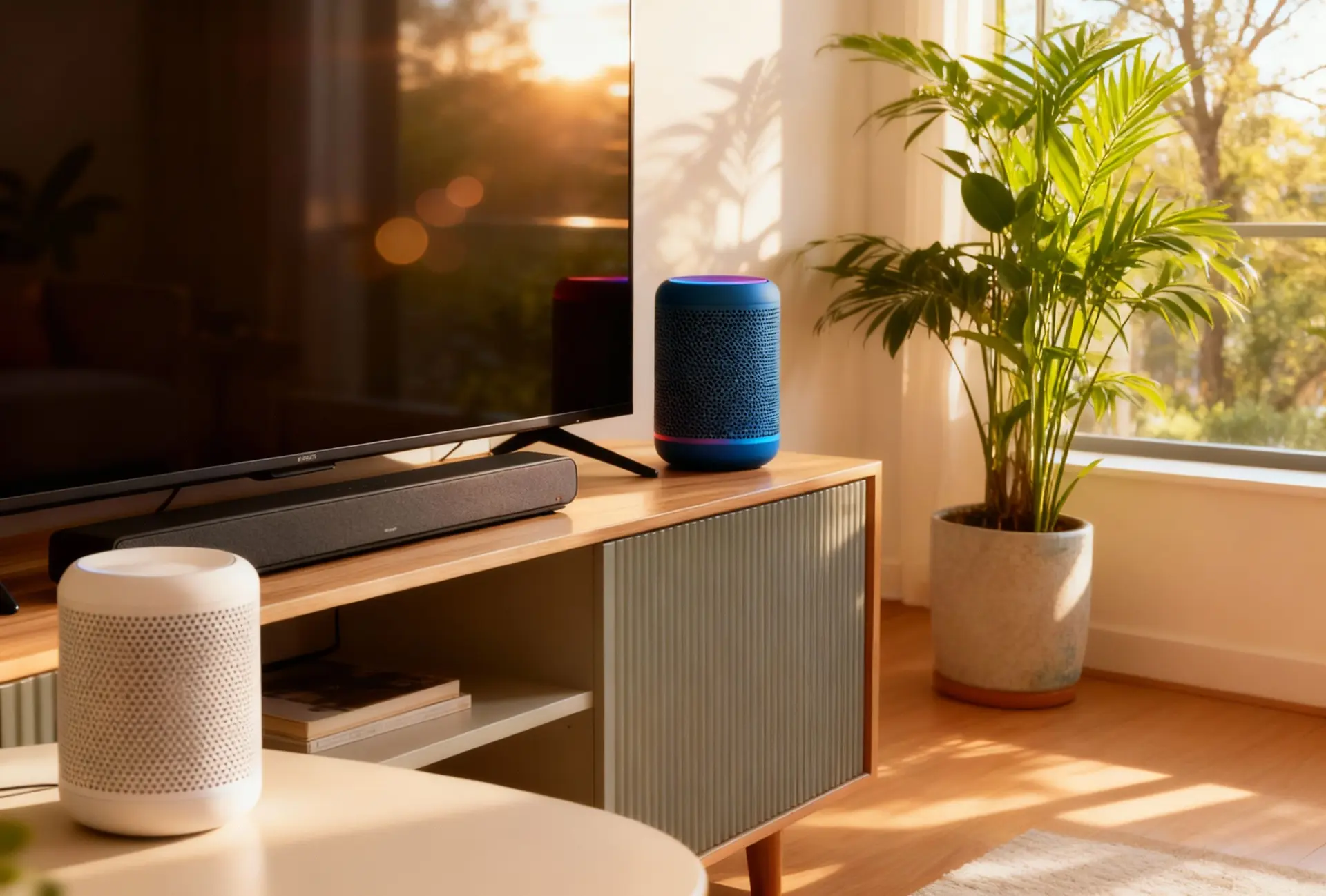
Users are quickly developing an ear for better sound. Immersive formats like spatial audio, advanced playback features like multi-room synchronization, and device handoff are becoming easier to deploy across living rooms, soundbars, and even compact speakers (TrendFeedr). What used to be “premium” functionality is increasingly expected as standard.
The focus is shifting from raw audio quality to how intelligently audio is delivered and experienced across devices.
The implication? Ecosystems must enable consistent, feature-rich playback everywhere, ensuring that advanced capabilities work reliably across the entire system, not just on flagship devices.
“It should just work” is the real battleground
With Matter, a standard designed to enable interoperability across smart home ecosystems, raising the baseline for multi-ecosystem management and frictionless setup flows, differentiation is shifting away from technical specifications toward execution across the full user journey, from onboarding to device grouping.
Consumers don’t think in protocols, codecs, or platforms. They think in moments.
- Grouping speakers should be instant
- Switching from headphones to speakers should be seamless
- Setup should take minutes and be straightforward
The implication? Interoperability and onboarding are becoming decisive factors. The brands that win are those that eliminate friction across the entire journey, from first setup to daily use and turn interoperability into a seamless user experience: fewer app hops, smoother coordination across devices and more reliable every day.
Because in 2026, reliability is innovation.
Service-agnostic is the new premium
Whether it’s Spotify, Apple Music, YouTube Music, or something new, connected audio systems need to adapt. The expectation of the users is simple: flexibility. Their content, anywhere, on any device. The role of the hardware brand is less about guiding content choices, and more about helping every option feel natural and well-integrated. Closed systems still exist, but the momentum is clearly shifting toward open, service-agnostic experiences, helping to reduce purchase risk for consumers and better future-proof devices.
The implication? The most valuable platforms aren’t defined by how closed they are, but by how naturally they bring multiple services together - through intuitive onboarding, fluid cross-device continuity, reliable voice control, and consistent playback. The real advantage lies in enabling effortless access to content across a wide range of destinations.
Enabled privacy by default
As devices become more intelligent and always-on, trust becomes critical (Deloitte).
Users want:
- Clear control over data
- Transparency in how voice and usage data are handled
- The ability to opt in or out without losing core functionality
The implication? Privacy is no longer just about compliance, it’s becoming a core part of the product experience. In connected audio, this is especially important as voice interfaces are embedded in intimate, shared spaces and everyday routines, not just isolated commands. Privacy by default is emerging as a strategic requirement and a meaningful differentiator.
Software is a product
The lifecycle of audio devices is changing. With over-the-air updates, products are no longer static. Features improve, new capabilities appear, and performance evolves over time. This shift turns connected audio into something closer to an ecosystem than a device, treating audio systems as software-defined experiences, not hardware endpoints.
The implication? Competitive advantage moves away from the day-one spec sheet toward lifetime software execution. A speaker, earbud, and sound systems continue to gain new features and services through regular updates. In a software-defined audio market, update cadence, app stability, compatibility, and service integration become core product attributes. These factors determine whether a device feels more capable a year after purchase or more obsolete. Ecosystem players can continuously refresh features.
The home is no longer the boundary
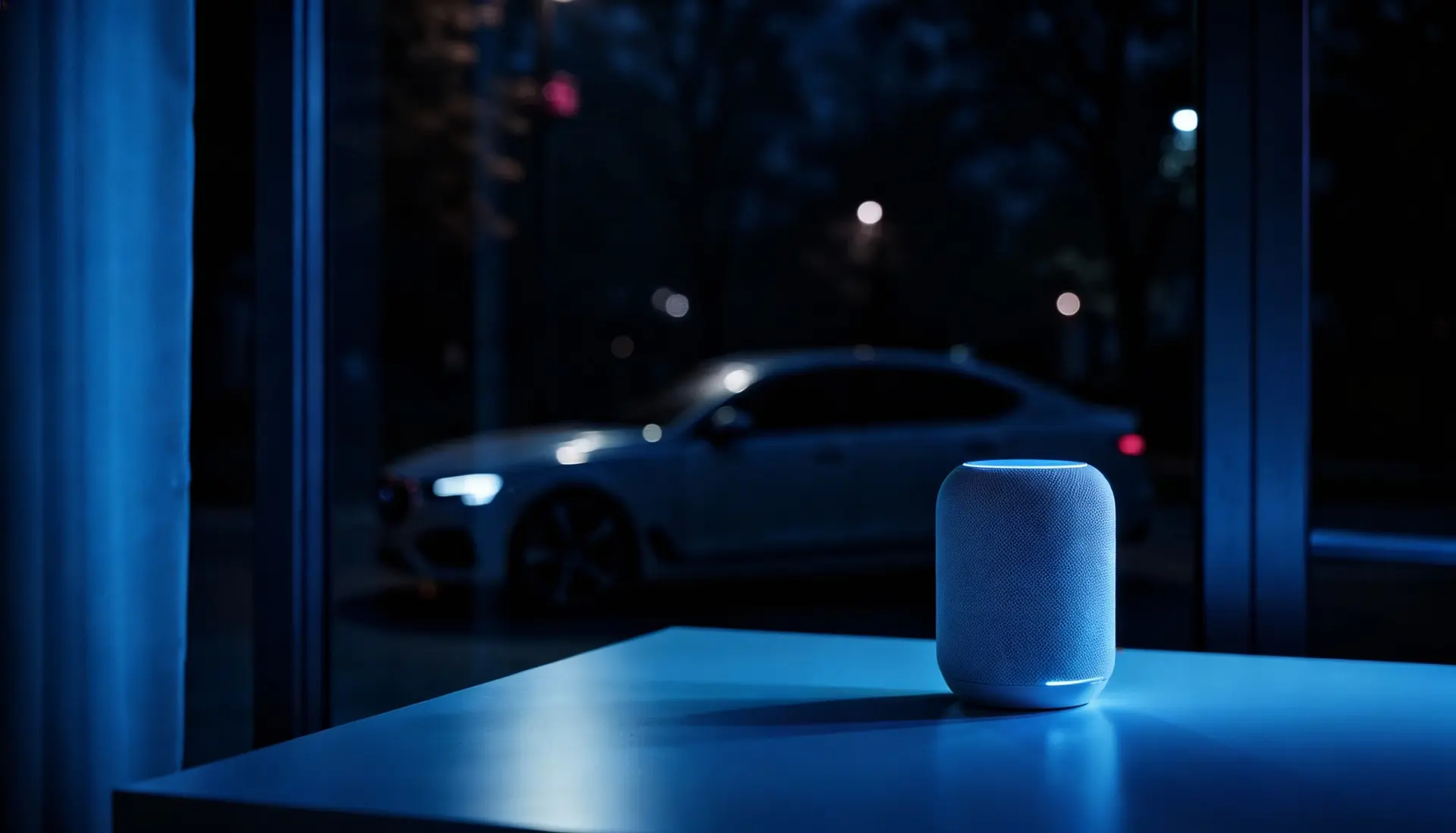
Perhaps the most important shift: connected audio is escaping the home. What used to be separate worlds are now blending: phones and speakers, TVs and soundbars, earphones and multi-room speak systems, cars and homes. Users expect continuity. Start a podcast in the car, continue it in the kitchen, finish it in the living room - without thinking about it (Ofcom). In practice, according to a survey conducted by Futuresource Consulting on behalf of Cinemo, 81% of consumers are more likely to buy a home device if it links with their car systems (From Living Room to Drivers’s Seat: Exploring the Demands of a United Audio Experience).
The implication? This is where ecosystems truly prove their value. Continuity isn’t delivered by a single device, but through how well everything works together. The brands that stand out are those that make the handoff logic, synchronization, shared identity, centralized control surfaces feel natural.
So, why do ecosystems win? Because no single device can deliver all of this in one. The experience only works when everything works together, including synchronization, consistency, centralized control and integrations.
Connected audio in 2026 isn’t only about having the best speaker. It’s about having the best system. By connecting devices, content, and users in one open platform, the Cinemo Cloud Ecosystem is shaping the future of truly unified digital media experiences.