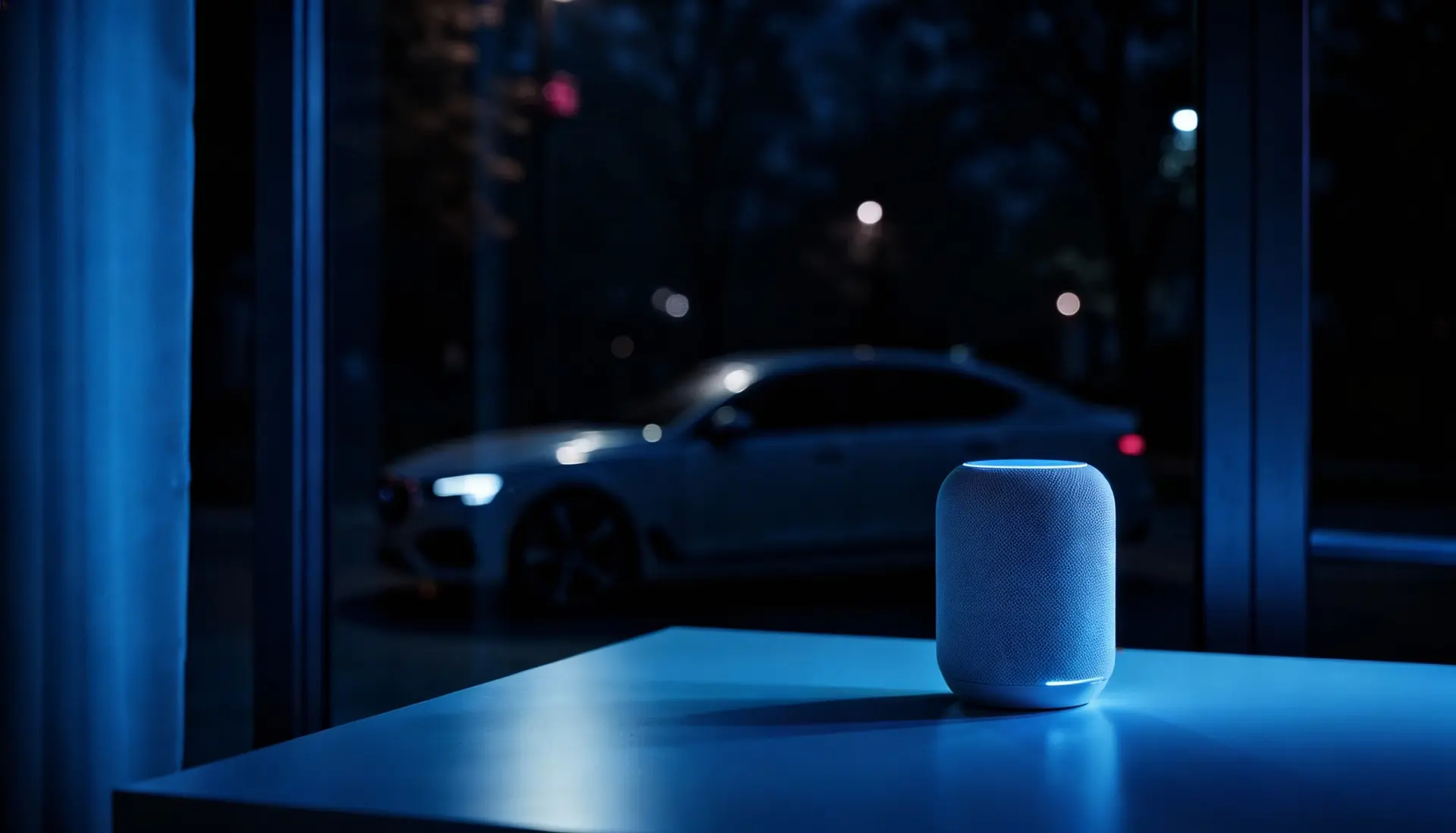
Car-Home Interoperability: The Next Generation of Connected Living
 Laura Setton
The line between our homes and vehicles is fading. Today’s consumers expect a seamless digital life that follows them from living room to driver’s seat, and back again. Car-home interoperability refers to the technologies and standards that allow vehicles and smart homes to share data and services in real time, enabling truly personalized, context-aware experiences.
In this post, we’ll explore the key drivers, technical enablers, user benefits, and privacy considerations of this convergence—and how Cinemo’s expertise helps drive it forward.
The Rise of Connected Ecosystems
The proliferation of Internet of Things devices in homes, combined with advances in automotive software, are creating new opportunities for interaction. Smart and connected speakers, lighting systems, and climate controls now have possibilities to communicate with in-dash displays, voice assistants, and mobile apps.
This level of synergy depends on common communication standards and open platforms. Industry groups such as the Connectivity Standards Alliance are promoting technologies like Matter to unite disparate home devices. The Matter protocol unites over 550 companies behind a royalty-free smart home standard, enabling disparate devices, such as light bulbs, locks, and thermostats, to interoperate securely. This frees developers to focus on innovation rather than connectivity.
While Matter focuses on unifying communication between smart home devices, it does not fully address media interoperability. Switching seamlessly between content or audio systems still requires a robust media layer.
In parallel, Android Automotive OS and companion platforms provide powerful cross-device SDKs designed for multi-screen and multi-environment experiences. The Android for Cars App Library now includes an IoT category, designed to run smart-home apps right from your car dashboard. These SDKs support session handoff, such as continuing a playlist started at home inside the car.
Finally, edge computing further enhances these capabilities by reducing dependencies on network connectivity, as well as preserving privacy by keeping sensitive data within user premises.
With its open cloud ecosystem, Cinemo uses proprietary protocols specifically developed for robust, scalable, and secure cloud-based interoperability. Our high-performance media middleware works across operating systems, hardware brands and types, and content services. This enables synchronized playback and consistent user experiences across devices and environments.
Why Convergence Matters
Smart homes and vehicles generate mountains of data: thermostat and lighting settings, media preferences, navigation habits, and more. When these environments speak the same language, users gain powerful use cases:
- Seamless Routines: Start your morning podcast at home and have it queue automatically in the car.
- Enhanced Safety: Home security alerts appear on your in-dash display if motion is detected while you’re away.
- Improved Comfort: Transfer climate control preferences between home and vehicle to maintain a consistent environment.
- Predictive Experiences: Let your system anticipate your habits with the help of AI, from preferred content to destination-based playback, and automatically adapt them across home and car.
- Connected Content Services: Access entertainment, collaborative tools, and personal media libraries across environments — whether you're relaxing at home, commuting, or working remotely.
New data from the 2025 report “From Living Room to Driver’s Seat: Exploring the Demands of a Unified Audio Experience” (a survey conducted by Futuresource Consulting on behalf of Cinemo) shows that over 90% of consumers say they are likely to seek out audio devices that allow smooth movement between car and home, highlighting the growing demand for seamless car-home experiences.
But there are still challenges. Consumers worry about fragmented ecosystems that require multiple apps and accounts, and many are concerned about the growing role of AI, particularly when it comes to losing control of personal data. Interoperability can introduce new points of failure when devices lose connectivity. And while modular software updates simplify feature rollouts, they demand rigorous testing to prevent service outages.
The convergence of home and car underscores the need for a unified ecosystem where devices and content services seamlessly connect, and for a single app that empowers users to control and manage any device, anytime, and anywhere. At Cinemo, we create the core technologies that facilitate this convergence.
Privacy, Trust, and Data Ownership
Seamless integration depends on transparent data practices and robust security. Among the key considerations are:
- Consent & Control: Users should be able to control which data flows between home and car, with clear opt-in settings and easy revocation.
- Data Minimization: Only collect data essential for each feature, discarding or anonymizing extraneous details.
- Encryption & Authentication: End-to-end encryption of messages, along with strict authentication, prevents unauthorized access.
- Regulatory Compliance: Adhering to regulations like GDPR ensures rights like data portability and erasure are respected.
Building user trust means communicating policies in simple language and providing visible controls. As more AI-driven decisions occur at the edge—and considering that AI models often require large data volumes to operate effectively—manufacturers and service providers must prove their solutions can anticipate needs without compromising privacy.
At Cinemo, privacy is a core design principle. We:
- Follow strict OWASP guidelines and perform regular security audits and vulnerability assessments to identify and fix potential issues early.
- Use SSL/TLS encryption to secure all sensitive data transmissions.
- Implement strict access controls, ensuring only authorized users can access protected systems.
- Store data in regional databases to comply with local laws and enhance protection.
- Ensure full GDPR compliance, supporting all user privacy rights.
- Continue to invest in evolving security strategies and technologies to maintain user trust and future-proof our systems.
With our strong technical safeguards and user-first policies, we help define a connected future where smart environments respect privacy by default.
Cinemo’s Role in the Ecosystem
Cinemo operates at the intersection of automotive and consumer electronics, offering an open cloud ecosystem that enables fluid experiences between Cinemo-enabled devices. Our key contributions include:
- Unified Cloud Backend: Our single, device-agnostic API serves as the central entry point for all interactions. This uniquely positions us to deliver a truly seamless user experience. Users can effortlessly move their content across any Cinemo-enabled device or environment without disruption, because our solution does not rely on specific hardware or operating system dependencies.
- Cinemo’s Patented Distributed Playback Technology: Industry-leading synchronized media playback achieves low latency synchronization across multiple devices exclusively through cloud infrastructure, without any local device-to-device connections.
- Proven Automotive Middleware: Reliable middleware technology integrates diverse content services, from entertainment to collaborative tools, directly into vehicle infotainment systems.
- Unified Interface for Ecosystem Control: Our mobile and web-based app serves as a single point of access for users to orchestrate their content and device interactions across all connected devices.
- OTA Updates: Cinemo supports Over-the-Air (OTA) updates, ensuring that systems can evolve without disrupting the user experience. This allows for faster deployment of new features, bug fixes, and security enhancements.
By combining deep expertise in automotive infotainment with strong CE partnerships, Cinemo accelerates the delivery of cross-device experiences that delight users without compromising privacy.
The Future of Connected Living
Though still early in its evolution, the trajectory of car-home interoperability is becoming clearer. Advances in AI agents that learn driver habits and make suggestions and predictions based on them, standardized protocols that unite smart devices, and ever more powerful in-dash and home units will drive richer, more reliable experiences.
Joint efforts among OEMs, Tier 1 suppliers, device manufacturers, content providers, and developers will be essential to building the experiences users expect. For product leaders, the opportunity lies in defining seamless journeys that respect user preferences and privacy at every step. By building modular, secure and user-centric platforms, the industry can deliver on the promise of connected living, where home and car truly function as one.